
OCTOBER 6TH 2026 SPECIAL MEETING
PAACT BOARD RECAP
October 6, 2026 Special Meeting
Superintendent's Report
Enrollment, buses and a bill in Lansing
General update. Dr. Roberson recognized Seaholm's 75th anniversary homecoming, held the Friday before the meeting. She said the program traced the school's history from its start as Birmingham High School, and that the video and script were produced by students. More anniversary events are planned through the year.
She also reported that Senate Bill 517 has passed the Senate with bipartisan support and is now in a House committee. She said the district would like to see it pass before November 3.
Enrollment. Dr. Roberson said she wanted to address misconceptions about the district's enrollment decline. She used audited FTE counts from CEPI, the state's Center for Educational Performance and Information, because anyone can look them up. FTE counts a half-day student as half a student, and it is the number the state funds.
She said the largest drop came during the pandemic: about 654 FTE over two years, roughly 8% of 2019 enrollment. Since then, she said, the count has been stable. It was 7,315 FTE in fall 2021 and 7,296 at the most recent audited count, a decline of 19 over five years, with gains in some years and losses in others.
She said each graduating class in that period was over 600 students, while incoming kindergarten classes were around 500. That kindergarten figure includes junior kindergarten, which the state treats as a planned retention year, so not every student counted in kindergarten moves on to first grade the next fall.
Asked about how the state counts students for funding, she said the state has moved to a three-year average, with districts receiving the better of that average or their current count. She said the business office could confirm how the rule will be applied.
Enrollment figures as presented
654 FTE lost over the two pandemic years, about 8% of 2019 enrollment
7,315 FTE in fall 2021
7,296 FTE at the most recent audited count
600+ students in each graduating class, against about 500 entering kindergarten
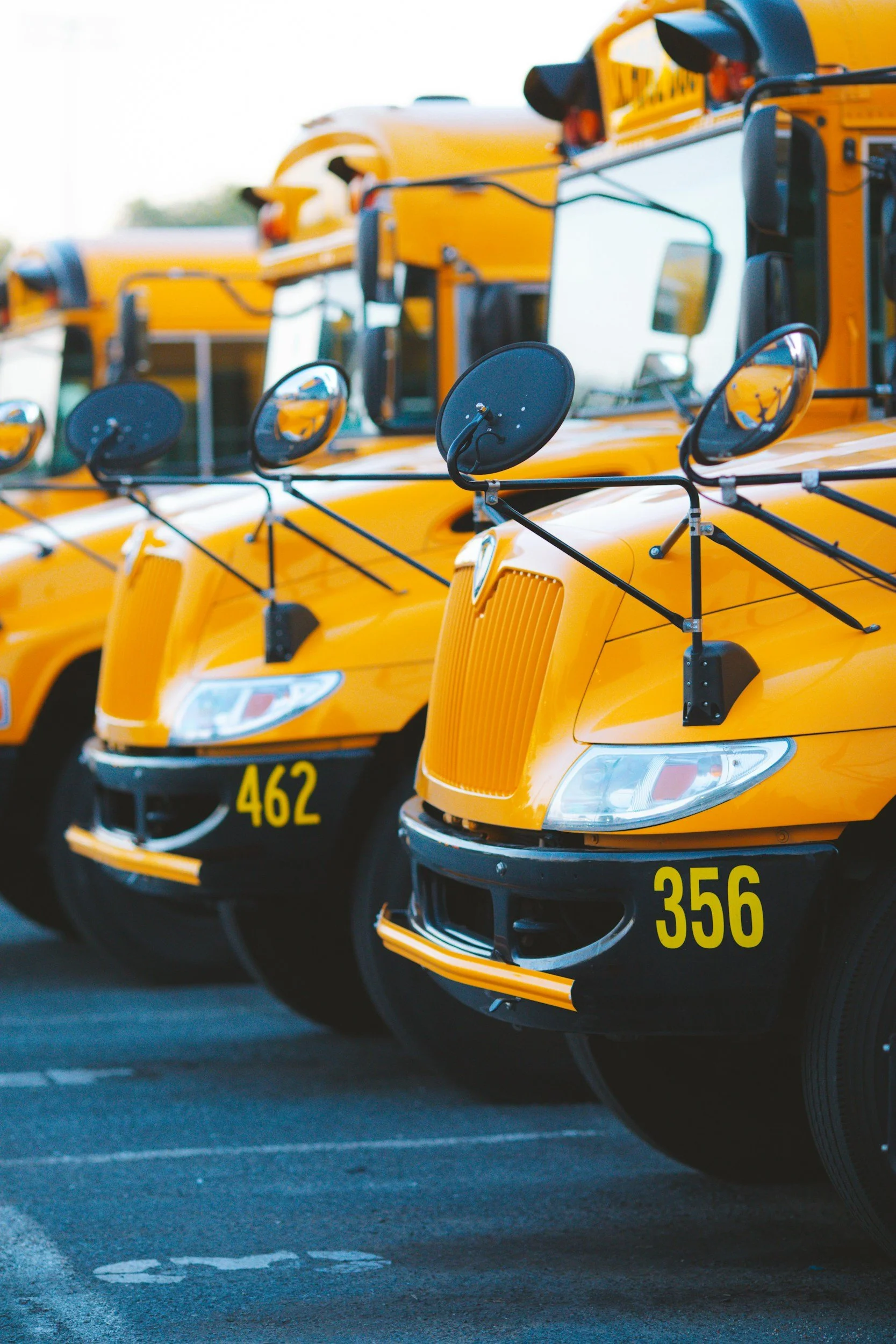
Transportation. Administration said the district is bringing back BusZone, last year's bus tracking app, for families while keeping Stopfinder, the system introduced this year. A communication to families was expected by the end of the week. Stopfinder remains the district's routing software and is expected to support student ID cards that scan on and off the bus in the future.
Administration said Stopfinder's tracking depends on cell service, bus Wi-Fi and the driver logging in, and that it has been least reliable in dense areas with many stops. BusZone reads directly from the GPS unit on the bus. Some routes are still running late. Administration attributed that to construction, higher than expected ridership and substitute drivers, and gave an example from that day of a route that ran 20 minutes late with a substitute after several on-time days with its regular driver.
Trustee Colleen Zammit asked about middle school students being let off a bus during the storm in the first week of school. Dr. Roberson said that should not have happened. She said the protocol is for drivers to go to the nearest school or shelter in place and not release students, and that Durham is addressing it with the driver.
Update, October 7. The district emailed families the morning after the meeting. BusZone is available again for all parents, and the district said it will be the source of truth for bus tracking and timing. Stopfinder stays live, and the district said it remains committed to a full transition to Stopfinder in the future. Setup instructions are on the district's Transportation Resources page.
Public Comment
One speaker, on the phone policy
We report what speakers said at the podium and attribute claims to them.
Jennifer Brodjeski, a Groves parent, addressed the bell-to-bell wireless device policy at the high school level. She said seniors are responsible for keeping up with email from colleges and meeting application deadlines, and that they have limited laptop access during the day and cannot check a phone at lunch. She noted the board plans to review the policy in December and said any change then would come late in the college application season. She asked whether the district could find a compromise for seniors now.
She also said her daughter has seen students sitting alone in their cars at lunch to use their phones, and that her daughter ate and studied in her car one day before an afternoon test because she could not use her devices to study inside the building.
Presentation
The $240 million bond, building by building
Plante Moran Realpoint, the district's bond planning firm, walked the board through the proposal on the November 3 ballot. The presenters said the plan is still in the strategic planning stage, with scopes of work being finalized for each building.
The district's 10-year capital plan identifies $470.5 million in needs across 18 buildings. The bond would fund $240 million of that. The presenters said the buildings are in good shape for their age and that much of the bond goes to systems people do not see: boilers, rooftop units, electrical, plumbing. They said the two high schools run diesel emergency generators that would be converted to natural gas, and that newer equipment would lower operating costs paid from the general fund.
Bond at a glance
$240,000,000 proposed, from $470.5 million in identified 10-year needs
18 buildings, average age 56 years, 1,964,178 square feet
3 series of $80 million, issued May 2027, 2029 and 2031, each for 20 years
$173,964,950 estimated total interest at an estimated 4.75% rate
0.00 mill increase, with the debt millage expected to stay at or below 3.80 mills
The packet marks the financing figures and the building budgets as preliminary.
Where the money goes
| Category | 2026 Bond |
|---|---|
| HVAC systems | $64,453,983 |
| Soft costs (architect, construction manager, contingency) | $55,964,710 |
| Site work | $28,902,745 |
| Technology | $25,504,890 |
| Interior renovations | $17,832,513 |
| Electrical systems | $13,878,022 |
| Security | $12,043,825 |
| Building envelope | $7,244,841 |
| Plumbing systems | $4,809,720 |
| New construction (Midvale addition) | $4,302,605 |
| Buses | $2,409,459 |
| Furniture and equipment | $1,623,516 |
| Abatement | $1,029,172 |
Largest allocations by building
| Building | 2026 Bond | 10-Year Need |
|---|---|---|
| Seaholm High School | $36,715,635 | $71,198,124 |
| Groves High School | $25,382,970 | $59,193,389 |
| Midvale Center | $23,555,838 | $23,921,012 |
| Derby Middle School | $19,987,816 | $32,275,085 |
| Berkshire Middle School | $14,968,500 | $29,578,368 |
| Birmingham Covington School | $12,256,054 | $27,055,577 |
Midvale Early Childhood Center. Midvale is the one building slated for expansion. The plan shows a 7,376 square foot classroom addition on the south wing, a new main office and secured entry, a new entry canopy, interior renovations, kitchen upgrades, window and door replacement, parking lot replacement and new accessible playgrounds. The presenters described Midvale as one of the more dated buildings in the district.
Administration said the expansion would bring early childhood staff together in one building and make room to restore half-day preschool options, which have shrunk as the district converted space to full-day GSRP classrooms. Administration said families still ask for half-day programs. It also said first-floor classroom space for the youngest students is limited because six of the eight traditional elementary schools are multi-story. In answer to a trustee, administration said the district does not plan to pull GSRP classrooms out of the elementary schools.
Other buildings. Elementary, middle and high schools would see safety, security and technology upgrades, mechanical replacements, and selective roofing, interior, parking lot, gym, pool, auditorium and athletic work. Playground upgrades for accessibility are planned across the elementary schools and BCS. A trustee asked whether recent playground work would be undone. The presenters said every piece of equipment has been assessed and newer equipment will stay.
Technology and buses. The technology list includes the emergency notification system, video surveillance, the phone system, network and wireless, classroom audiovisual, staff computers, student devices, the firewall, servers and copiers. A trustee asked how many buses the bond would buy. The presenters did not have the number and said they would follow up.
Why a bond for this work. A trustee recalled a boiler failure before the 2020 bond that had to be paid from the general fund, and said the district does not have a sinking fund, so a bond is its way to pay for this kind of work. A presenter said the 2019 capital plan led to the $195 million bond approved in 2020, and that this proposal continues that plan and adds needs identified since.
Bond advocacy and communications
A trustee said she had seen mailers and lawn signs and asked whether the district is putting out signs. The board president told trustees that, as elected officials, they may advocate for the bond, and that she could direct anyone who wants a sign to Friends of BPS, the group running the campaign. Dr. Roberson said district employees may not ask anyone to vote yes while on the clock and may only share information.
A trustee asked whether the district is hosting informational sessions where residents can ask questions. The answer was that none are planned, and that the district did not hold that kind of open question session before the 2020 bond. A trustee noted she had received three mailers so far, each larger than the one before.
Discussion Item
$100,000 more for middle school science materials
The assistant superintendent for student learning and inclusion presented an amendment to the Twig Science purchase the board approved earlier. The amendment adds up to $100,000 to the six-year contract, raising the authorized total from $715,827 to $815,827.
She said the original order used current enrollment numbers and left out three things: fifth graders at Birmingham Covington School, who use sixth grade science materials; second copies of books for students whose IEPs call for one at home; and the usual extra copies each school keeps for lost books and new students. She took responsibility for the omissions.
She said the added cost fits within her department's existing budget and does not require additional general fund dollars. The resolution would also let the superintendent buy more materials at the contract's unit prices during the six-year term without returning to the board, subject to available funds. This was discussion only. The resolution may come back for a vote at a future meeting.
Closed Session
Collective bargaining
The board moved into closed session under the Open Meetings Act, MCL 15.268(1)(c), for strategy and negotiation sessions connected with a collective bargaining agreement.
COMING UP
October 20: the next bond update to the board.
November 3: Election Day. The bond proposal is on the ballot.
December: the board's planned review of the wireless device policy.
Public comment is open at every regular meeting and study session.
